What we learned from our first thousand customers

6 min
read
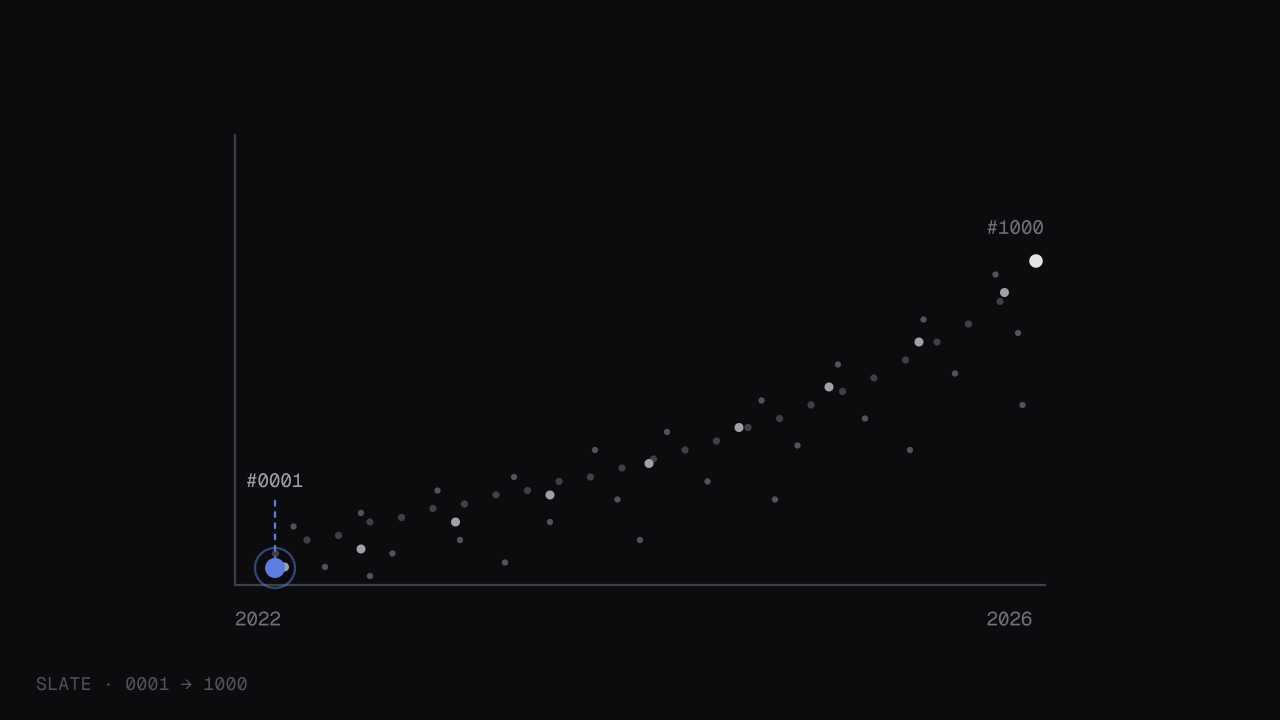
A thousand customers is a strange milestone.
It's big enough to feel real, small enough that you still remember individual conversations. We crossed it recently, and instead of celebrating and moving on, we wanted to stop and ask ourselves an honest question: what have these first thousand people actually taught us?
The answers were not always what we expected.
People don't buy features. They buy outcomes.
When we started, we talked about our product in terms of what it could do. The capabilities, the options, the long list of things you could configure.
What we slowly realized is that almost nobody cares about any of that. People don't wake up wanting features. They wake up wanting a problem to go away. The customers who stayed weren't the ones impressed by our longest feature list. They were the ones who got a real result quickly and never had to think about it again.
This changed how we build. We stopped asking "what can we add" and started asking "what outcome are we actually delivering, and how fast can someone reach it."
The quiet ones matter most
Here's something that surprised us. The customers who give the most feedback are rarely the ones who represent the majority.
The loud minority will tell you exactly what they want, often in great detail. It's tempting to build entirely for them, because they're the easiest to hear. But for every person who writes in, there are dozens who simply use the product, form an opinion, and quietly leave if it doesn't work for them.
The most important feedback is the kind you never receive directly.
Learning to read the silence, the patterns in how people actually behaved rather than just what they said, taught us more than any single conversation.
Onboarding is the product
We used to think of onboarding as the thing that happened before the real product experience began. We were wrong.
For most people, the first ten minutes are the product. If they reach a meaningful result quickly, they stay. If they get confused, stuck, or overwhelmed, they leave, and no amount of powerful features further down the line will ever bring them back, because they'll never see them.
Some numbers made this impossible to ignore:
The majority of customers who churned did so in their first week, not later
The single biggest predictor of long-term retention was reaching a first success quickly
Most of the people who got stuck never told us. They simply didn't come back
Once we saw this clearly, we redirected a surprising amount of our effort toward those first ten minutes. It remains some of the highest-leverage work we do.
Trust compounds slowly, then all at once
The last lesson is the one we think about most.
In the early days, every customer felt like a small miracle, won one conversation at a time. Progress was slow and personal. Then somewhere along the way, something shifted. People started arriving because someone they trusted had recommended us. The work we'd put into earning each individual's trust had quietly compounded into something larger.
There's no shortcut for this. You earn it slowly, customer by customer, by doing right by people even when it's inconvenient. And then one day you look up and realize that reputation has become your most valuable asset, built entirely from a thousand small decisions to take care of the people who took a chance on you.
Onward
A thousand is just a number, and by the time you read this it will already be out of date. But the lessons behind it are the kind we hope to carry no matter how large we grow.
To everyone who was one of those first thousand: thank you. You shaped this more than you know.
Share this article:
Head of Growth Adrian Costa leads and plans the growth at Slate, more interested in the unglamorous parts than the loud ones. He came up through B2B marketing.


